
In today’s fast-changing tech world in the United States, one of the biggest decisions professionals face is whether to work as a freelancer or take up a full-time job. Both options offer strong opportunities, good income, and career growth, but they are very different in how they shape your daily life and long-term future.
A few years ago, full-time jobs were the default choice for most people. Freelancing was often seen as risky or temporary. But things have changed. With the rise of remote work, global clients, and digital platforms, freelancing has become a serious career option. At the same time, full-time tech jobs continue to offer stability and structured growth that many people still prefer.
In 2026, the choice between freelancing and full-time work is not about which one is better overall. It is about which one fits your personality, goals, and lifestyle.
Understanding the Real Difference Between Freelancing and Full-Time Work
At a basic level, freelancing means working independently, usually for multiple clients, while full-time work means being employed by a single company. But the real difference goes much deeper than that.
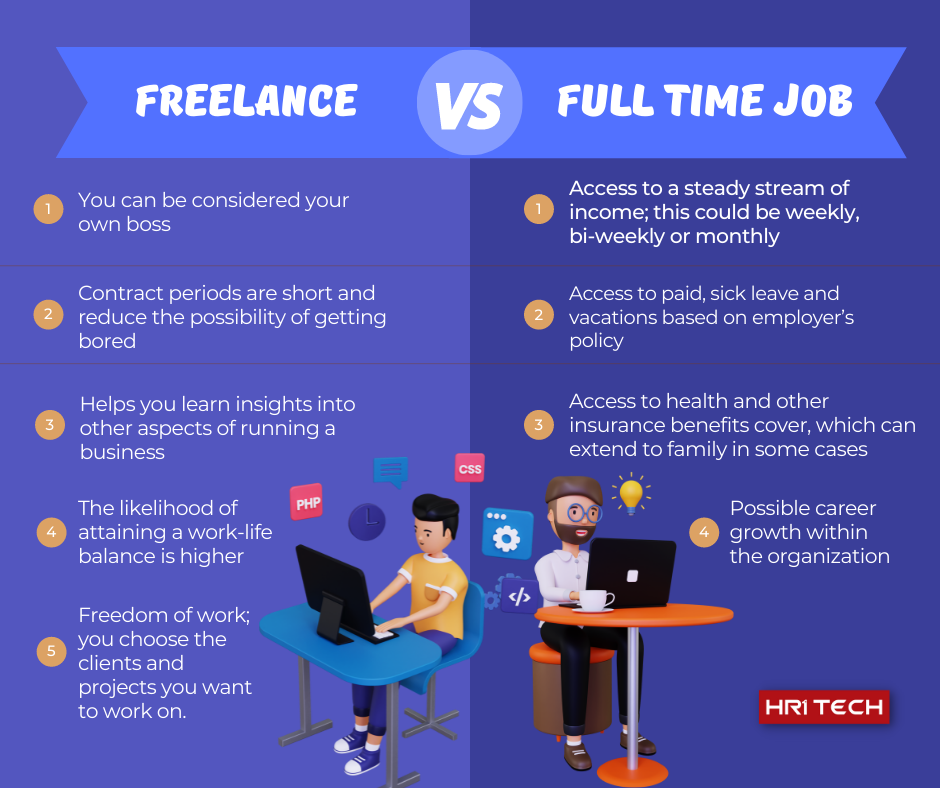
When you take a full-time tech job in the USA, you become part of an organization. You work with a team, follow a structured schedule, and focus on long-term projects. There is usually a clear role, defined responsibilities, and a steady monthly salary. Companies also provide benefits like health insurance, paid leave, and sometimes retirement plans. This creates a sense of stability that many people find comforting.
Freelancing, on the other hand, gives you complete control over your work. You can choose your clients, set your own rates, and decide when and where you want to work. This level of freedom is one of the biggest reasons why people move towards freelancing. However, it also comes with responsibility. You are not just doing the technical work, but also handling communication, payments, and client relationships.
Another major difference is how work is structured. In full-time jobs, tasks are often part of larger projects that may take months or even years to complete. In freelancing, work is usually project-based or short-term. You might complete one project and then immediately start looking for the next one.
There is also a difference in how success is measured. In a full-time role, performance is evaluated through reviews, promotions, and long-term contributions. In freelancing, success depends on your ability to deliver quality work consistently and maintain good relationships with clients.
Income, Stability, and Work-Life Balance
One of the biggest factors people consider when choosing between freelancing and full-time jobs is money. Both options can be financially rewarding, but they work in different ways.
Full-time tech jobs in the USA usually offer a fixed salary, which provides financial stability. You know exactly how much you will earn each month, which makes it easier to plan your expenses and savings. Salaries in tech are generally high, especially in fields like software development, data science, and cloud computing. Over time, you may also receive raises, bonuses, and promotions.
Freelancing income is less predictable. Some months you may earn more than a full-time employee, especially if you have high-paying clients or multiple projects. Other months may be slower, with less work and lower income. This uncertainty can be stressful, especially in the beginning.
However, freelancing also offers the potential to earn more in the long run. Since you can work with multiple clients and set your own rates, there is no fixed limit on your income. Experienced freelancers who build a strong reputation often earn significantly more than full-time employees.
Work-life balance is another important factor. Full-time jobs usually have fixed working hours, although this can vary depending on the company. Some roles may require overtime or tight deadlines, which can affect personal time. On the positive side, once the workday is over, you can often disconnect and relax.
Freelancing offers more flexibility in terms of time. You can choose when to work and take breaks whenever needed. But this flexibility can also become a challenge. Without a structured schedule, it is easy to overwork or lose focus. Many freelancers find themselves working irregular hours, especially when dealing with clients in different time zones.
Another aspect to consider is job security. Full-time jobs generally offer more stability, especially in established companies. Freelancers, however, always need to look for the next project. This constant need to find work can create pressure, but it also encourages continuous growth and networking.
Long-Term Growth and Choosing the Right Path
When thinking about the future, both freelancing and full-time jobs offer different types of growth. The right choice depends on what kind of career you want to build.
In a full-time tech job, growth usually follows a structured path. You may start as a junior developer or analyst and gradually move up to senior roles, team lead positions, or management. Companies often provide training, mentorship, and opportunities to work on large-scale projects. This kind of environment is ideal for people who prefer stability and clear direction.
Freelancing growth is less structured but can be more flexible. You can choose to specialize in a particular area, work with international clients, or even build your own business over time. Many freelancers eventually start agencies or create their own products and services. This path requires more initiative and risk-taking, but it also offers greater independence.
Another important factor is skill development. In full-time roles, you may work deeply in one area, becoming an expert in specific technologies used by your company. In freelancing, you are often exposed to a variety of projects and tools, which can help you develop a broader skill set.
The future of work in the USA is moving towards flexibility. Many professionals are now combining both approaches. Some people work full-time while taking freelance projects on the side. Others start as freelancers and later move into full-time roles, or vice versa. This shows that the choice is not always permanent.
What matters most is understanding yourself. If you value stability, structured growth, and teamwork, a full-time job may be the better choice. If you prefer independence, flexibility, and the ability to control your work, freelancing may suit you more.
The tech industry gives you the freedom to choose your path. Both freelancing and full-time jobs can lead to successful and fulfilling careers. The key is to stay adaptable, keep learning, and choose the option that aligns with your personal and professional goals.